The Visual System
How utilizing the visual system can have a profound impact on your training. Part 2

Here’s a Brief Recap
If you haven’t yet, read here for Part 1!
People are quick to focus on the muscle groups or biomechanics of movement that they want to change. You want to hold a longer plank? You want to improve a certain technique in your sport, or get a new PR of your bench press or run time? These are all amazing goals.
The way to reach those goals may be something you haven’t thought of before.
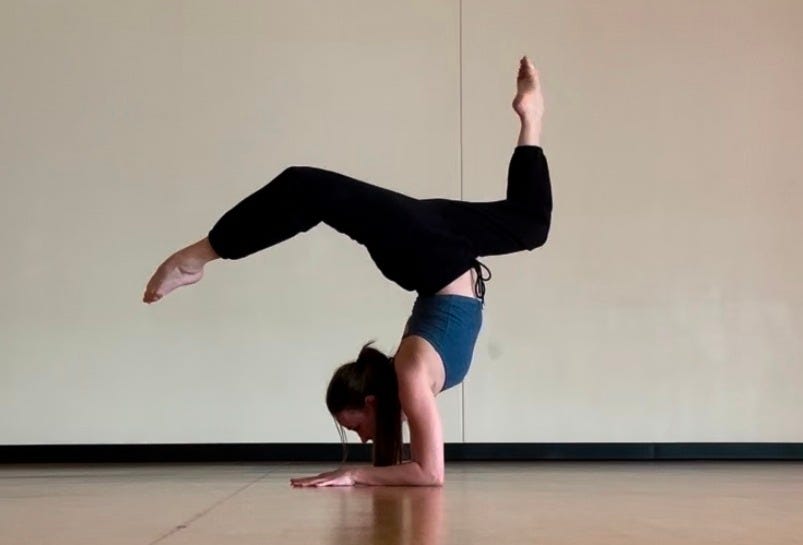
Understand that your visual and vestibular system play a huge role in peak performance. (And it’s being used all the time, whether you know it or not!)
If you want to become a better athlete or be pain-free, understand that sensory matching is the goal.
Your brain has 3 main systems for sensory input (signals that travel to your brain):
1. Visual system
2. Vestibular system
3. Proprioception system (read more about it here)
I listed them by number because the brain typically prioritizes these systems in a hierarchy.
Understand that no part of your body should be ignored. In this newsletter, we’ll learn about the visual system - an extremely important system that is often overlooked in the fitness industry.
#1: The Visual System
The visual system plays an integral role in movement as a whole.
There are more neurons in your visual system than for voluntary movement in your whole body combined.
Read that again.
That’s why it’s #1.
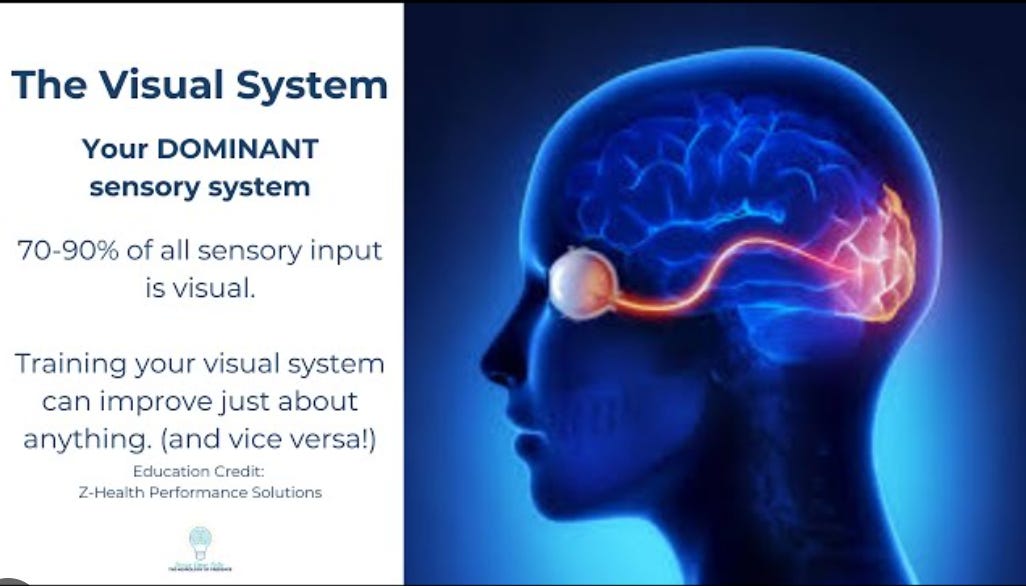
The visual system is complicated.
So complicated that I can’t talk about it in nearly any depth in this one newsletter! But here’s a brief overlay:
You may or may not have heard, but your eyes do not see. Your brain does. Your eyes merely take in light, and your brain does the rest to process what you see.
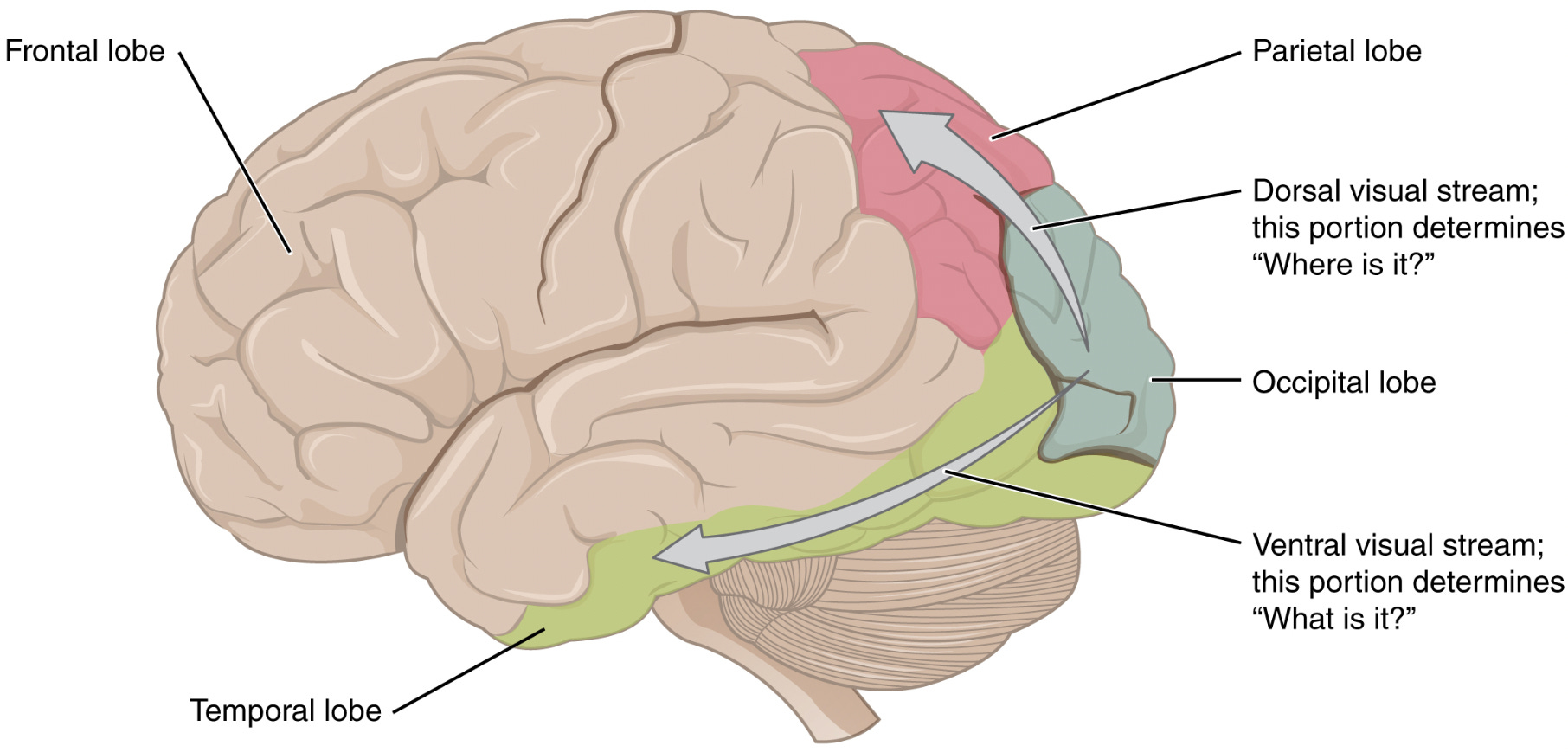
Despite the occipital lobe being where the visual system primarily lies, vision actually lives in all parts of the brain. Your eyes take in light, which travels through the occipital nerve to the back of the brain (occipital lobe). This information is then interpreted by the brain. (Flipping the light and combining the information from both eyes to create a general overlay to make “one” picture). It also sends signals to other parts of the brain to interpret things like “What is it?” and “Where is it?”
There are several ways the brain processes vision: depth perception, eye movement, night/day vision, and peripheral awareness.
Watch a short video here to learn more on how your eyes perceive light.
What is Vision Training?
Watch here: How a 20 Minute Eye Drill Fixed One YEAR of Shoulder Pain
Key takeaway: Stimulating and “training” the visual system can have a profound impact on movement performance and injury recovery because of how much humans rely on visual input.
There are a LOT of different ways to work on the visual system to enhance performance (and mental health). Every person may require something different. Follow along for an example!
Start with an exercise.
It can be any exercise that you want to get better at.
For this specific instance, let’s do a balance exercise. This varies from person to person. Choose YOUR level:
Level 1: Start with your feet glued together and close your eyes. Can you hold this easily for 15 seconds? If so, take it up to level 2.
Level 2: Take your right foot off the ground with eyes open. Still too easy?
Level 3: Keep your right foot lifted and close your eyes.
Find the level for which it becomes difficult to hold for more than 5-10 seconds. Again, we want this to be challenging, so it’s okay to wobble and fall over. In fact, you should!
Once you find your level, try it a couple of times. Notice how long you can stay on balance. How many seconds in do you feel unstable or flap your arms to stay steady? Do you typically fall over to one side? Jot down or notice it. Now, depending on your body, this is where you experiment.
Smooth pursuits
Smoot pursuits are one of the baselines of visual testing and can be done in many different ways. It’s a great way to check cerebellar function as well as other neural deficits. In the video, the patient’s eyes are moving from right to left in a smooth movement. I encourage you to try something a little different for this exercise. Read and follow below.
Grab a pen and hold it at arm’s length in front of you. Focus on a certain point on the pen.
Drag the pen over to the right side only, watching the pen as far as you can without moving your chin.
Once you can no longer see the target clearly without moving your head, close your eyes and reset the pen back in front of you while your eyes are closed. Open your eyes to gaze back at the pen in front of you.
Repeat 4-5 times.
Try your balance exercise. Notice: Did your balance improve? Did it become harder? Maybe there was no change at all.
Repeat the smooth pursuits, dragging your pen to the left side only, closing your eyes, then resetting back to center.
Try the same balance exercise you chose. Is there a difference again?
Now, try it all again with different variables (Left leg balance, dragging the pen to the left only, then right only).
If your visual system is working well, you may not find a difference at all. Or you could be surprised at the change within that simple exercise.
Maybe you felt more stable. Maybe you could hold it longer without flapping your arms. Or maybe, you were better off before, and the smooth pursuits made your balance worse!
If you are wondering how this can help your bench press PR, swim technique, flexibility, or any movement goal, this is where it gets more complicated. Every single person has a different nervous system. This vision exercise only provides a gateway to introduce you to a new way of understanding the importance of the visual system.
Remember: Sometimes, bilateral (both-sided) movement does not benefit you. Try smooth pursuits only to one side and testing your balance before switching to the other side. In some cases, moving your eyes to one side can actually make movement worse because your brain reacts to stimuli in different ways. Again, every body is different, and what works for one may not work for someone else.
Other Vision Tips When Working Out
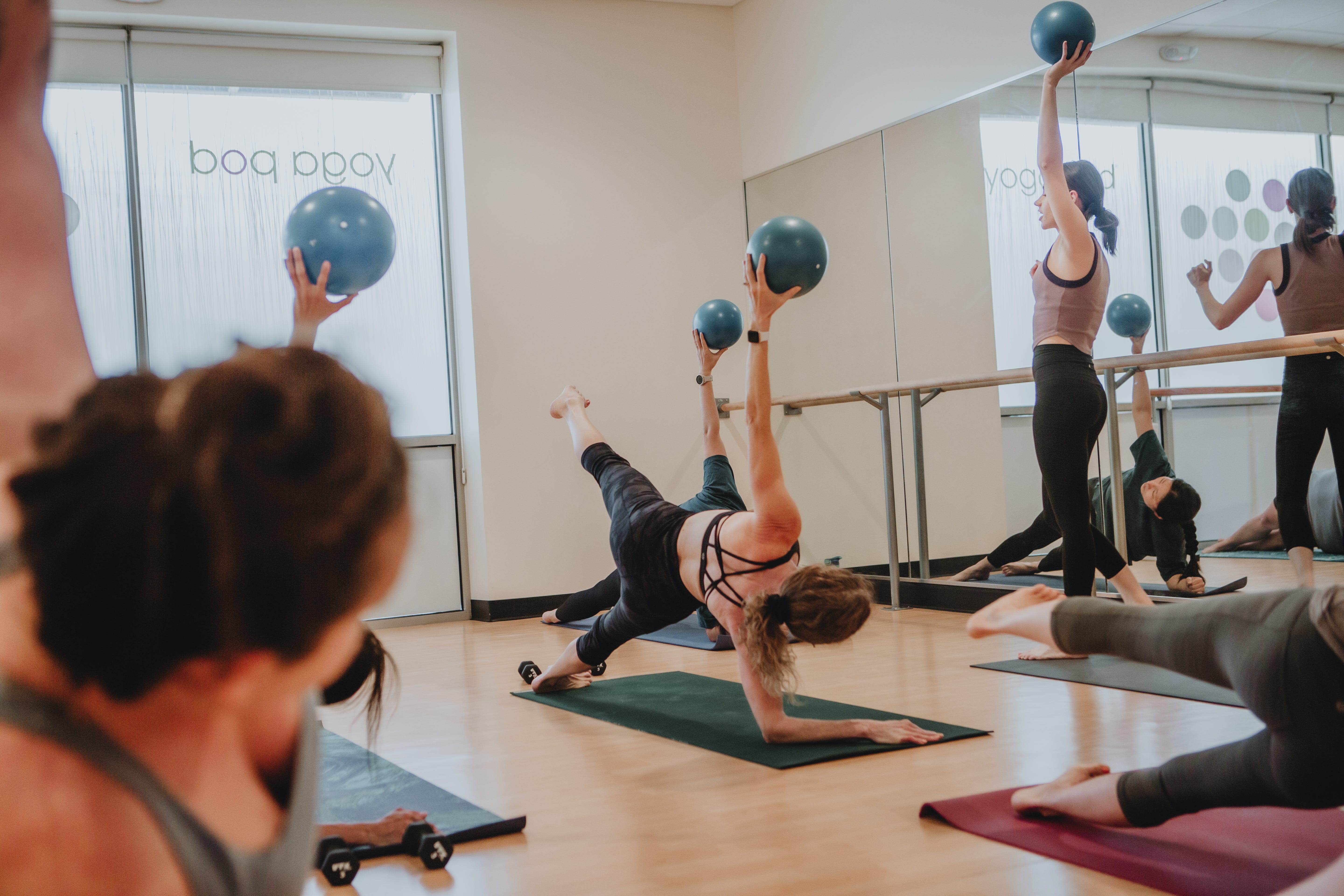
Gaze matters - whatever workout you’re doing, notice where you’re looking. Try to continue the gaze lifting through the crown of your head.
Hand-eye coordination - in many sports, being able to track a ball with your eyes is key. Training the visual system will help your reaction time and coordination.
Reset balance: Fix your gaze on something that is not moving ahead of you to help stabilize yourself in whatever stance you’re in.
Remember: Your visual system is like a muscle. Training it can help strengthen it.
In the fitness world, a large portion of focus is on your body and leaves out some of our most important systems. By learning about them, you may start to understand the importance of the visual and vestibular system when it comes to mental and physical health.
Learn More About Vision Training Here:
8 Easy Eye Exercises to Improve Vision: Techniques and Tips
How Vision Skills Improve Your Performance
Stay Tuned For Part 3: The Vestibular System.
Thanks for reading. Until next time -L